BRAZILPRONTO
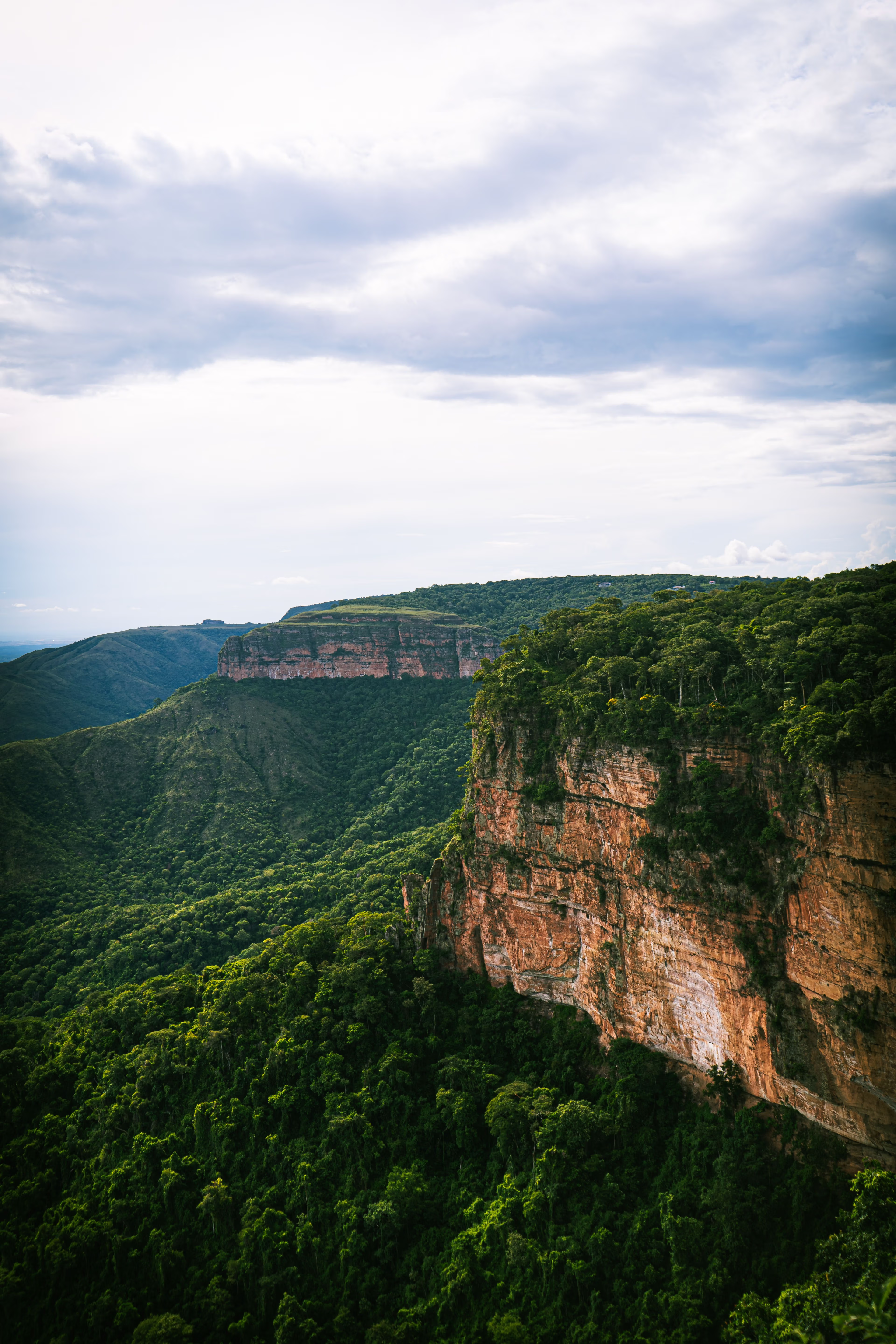
A tall exposed cliff rises above a deep green valley in Chapada dos Guimarães.Chapada dos Guimarães · Mato Grosso

Mato Grosso's plateau, waterfalls and stone

Chapada dos Guimarães

Red cliffs above a wide valley. Water falling through a green amphitheater. A small town that deserves more than a lunch stop. Come through Cuiabá and give the plateau several days of its own.

Choose your plateau base
Start with
Three or four nights
Gateway
Cuiabá, Mato Grosso

Where to stay

Choose a base for mornings and evenings.

Chapada dos Guimarães is both the name of a town and a much larger landscape of park areas and privately managed attractions. A central base suits a first multi-day stay; a rural property can make time off the trail feel more secluded. Cuiabá works as an arrival or departure base, but repeated day trips add road time. Three or four nights gives room for a viewpoint introduction, a guided landscape outing and either caves or a longer walk.

  1. 01
    Chapada town center

    Stay near the center when being able to reach dinner and everyday services easily matters. Compare the actual walk from the accommodation rather than relying on a central label. You will still need transport to many attractions, but the town gives you a practical return point between outings. This is a useful first choice for travelers who want a mixture of guided days, independent meals and a less isolated evening.

  2. 02
    A rural or view-focused property

    Choose a property outside the center when its setting is part of the reason for the stay. Confirm the final road, restaurant arrangements and how a guide will collect you. An impressive view does not establish proximity to the park entrance or cave complex. This can suit a slower visit with time at the accommodation, provided the route to each planned outing remains workable.

  3. 03
    Cuiabá for a shorter introduction

    A day trip from Cuiabá can introduce the plateau if your schedule is limited, but choose a focused program. Avoid trying to combine a cave circuit, several park areas and a long town stop into one day. For a broader stay, move up to Chapada rather than repeating the same approach road. Keep airport timing and any Northern Pantanal connection separate from the hours you want to spend outdoors.

A slender waterfall descends a sheer sandstone wall in Chapada dos Guimarães.Waterfall country · Chapada dos Guimarães

01 · Véu de Noiva and the waterfall routes

Begin where the water drops away.

Véu de Noiva introduces the scale of Chapada dos Guimarães: a waterfall framed by the plateau's high walls, seen from a designated viewpoint. It is a strong first encounter, especially when you have just come up from Cuiabá. Give the outlook time, then choose a separate waterfall walk for another part of the day or stay. The main viewpoint, Circuito das Cachoeiras and the Cachoeirinha/Namorados route are different visits, with different effort and entry arrangements.

  1. 01
    Match the walk to the day you have

    The viewpoint is the shorter introduction. Circuito das Cachoeiras follows the Córrego Independência through a sequence of falls and permitted bathing places, while Cachoeirinha and Namorados offer another route from the main visitor area. Compare current maps and total walking time before deciding. Think about the return as well as the descent, and leave time to enjoy a stop instead of treating every waterfall as a photograph collected on the way past.

  2. 02
    Keep a viewpoint visit distinct from swimming

    Go to Véu de Noiva for the outlook; choose the designated waterfall routes when a bathing stop is part of your plan. Follow the park's current boundaries and instructions at each place. Water volume, weather and maintenance can affect what is available on the day. Carry what you need for a comfortable walk and a dry return, and give the park morning priority over a tightly scheduled restaurant reservation elsewhere.

Warm natural light reveals the sculpted forms of rock towers in Brazil, shown as landscape context.Brazil’s sculpted rock landscapes

02 · Cidade de Pedra

Stand above a landscape of stone.

At Cidade de Pedra, the plateau's edge opens into a series of sandstone forms and broad views. The name makes sense as you look across the weathered rock: towers and walls appear to gather into a city of their own. This is a place for looking outward and then noticing the shapes close to the trail. A guided visit can connect the rock formations, the valley below and the plants along the route, making the outing richer than a single stop at the most familiar overlook.

  1. 01
    Arrange the approach with the guide

    Cidade de Pedra currently requires an authorized guide, advance arrangements through that guide and 4×4 access. A short walk at the destination does not make the approach a simple independent drive. Confirm where you will meet, which vehicle is included and how the visit fits the weather and light. If adding another outing, have the guide assess the combination rather than joining distant map pins into an optimistic half-day circuit.

  2. 02
    Let the designated viewpoints do their job

    Different outlooks reveal the escarpment from different angles. Stay within the marked boundaries and leave room for others to enjoy the view; stepping beyond a barrier does not improve the experience. A longer lens or a carefully chosen framing can isolate a rock form without moving toward an edge. Bring an interest in the whole landscape, including the valley's vegetation, so changing cloud or haze still leaves something worth noticing.

Tall, layered canyon walls rise directly from the water at Capitólio, Minas Gerais, shown as Brazilian canyon context.Brazil’s canyon landscapes · Capitólio, Minas Gerais

03 · Vale do Rio Claro

Go down into the landscape.

After looking across the plateau, Vale do Rio Claro brings a change in perspective. The route combines the valley, river and the outlook from Crista do Galo, a remaining rock form associated with the retreat of the escarpment. Much of the approach is by vehicle, with walking and river time shaping the visit itself. It works well as a distinct outing within a multi-day stay, giving you more than a sequence of high viewpoints.

  1. 01
    Choose a program with time at river level

    Ask the authorized guide which parts of Rio Claro are suitable and available on your dates, and how much time the proposed itinerary leaves for them. If a permitted bathing stop matters, say so before booking rather than assuming it is included in every version of the outing. Compare the vehicle journey, the walking portions and any equipment provided. A well-paced visit leaves room to settle into the valley instead of rushing between its named stops.

  2. 02
    Understand the route's physical demands

    A drive-assisted outing can still include uneven ground, steps and a climb to an outlook. Describe your group's needs and ask the guide to explain the actual route in plain terms. Rio Claro currently uses guide-arranged access and a 4×4 approach, so confirm both in the booking. Plan footwear and belongings around the day's land-and-water combination, and follow the guide's decisions when rain or river conditions change what can be done.

Sunlit cliffs and a rocky foreground in Chapada Diamantina, Bahia, shown as Brazilian highland context.Highland walking landscapes · Chapada Diamantina, Bahia

04 · A longer day on foot

Give the summit the time it asks for.

Morro de São Jerônimo belongs in a different category from a short viewpoint walk. The route is a substantial day on foot, with a scrambling section toward the summit and a return that still has to be completed after the big view. Casa de Pedra, a rock cavity along the approach, adds another reason to look closely at the terrain. Choose this outing because you want the walk itself, not because its name appears on a list of places to tick off.

  1. 01
    Make an honest choice about the effort

    Discuss recent walking experience, comfort with steep ground and the scrambling section with an authorized guide. Ask how the route is managed, when the group turns around if conditions deteriorate and what the guide expects you to carry. This is a day to protect in the itinerary, with an unhurried evening afterward. If your group wants a gentler experience, choose a shorter park route without treating it as a lesser way to see the region.

  2. 02
    Notice what changes between the viewpoints

    A longer walk creates time to see the plateau beyond its famous outline: open stretches, patches of shade, stone underfoot and the way the view changes with height. Let your guide set a pace that allows both observation and a comfortable return. Start prepared for sun and shifting weather, and keep water and food accessible. The route requires advance guide arrangements; do not arrive expecting to add it casually after another morning excursion.

Choose a hiking experience
Sculpted rock at a cave mouth in Castelo, Espírito Santo, shown as Brazilian cave landscape context.Brazil’s cave landscapes · Castelo, Espírito Santo

05 · Aroe Jari

Enter another kind of stone landscape.

The Aroe Jari cave complex adds a different chapter to a Chapada dos Guimarães visit. Its sandstone cavities are on a private property beyond town, separate from the national park's main visitor entrance. Plan the complex as an outing of its own, with the road journey and selected walking route included in the day. Aroe Jari, Kiogo Brado, Pobe Jari and the Lagoa Azul setting have their own forms and visit arrangements; a package name does not tell you which parts you will actually enter.

  1. 01
    Compare the full walking route with assisted access

    The complex offers arrangements that can reduce some of the approach walking, but a shorter approach is not the same as an accessible cave interior. Ask the operator or guide to describe the version you are considering, including ground conditions, low or dark spaces and the amount of time underground. Confirm what equipment and guidance are included. Choose the route for your group's comfort and curiosity rather than assuming the longest package is always the best visit.

  2. 02
    Keep the blue-water names straight

    Lagoa Azul here belongs to the Chapada dos Guimarães cave complex. It is not Bonito's Gruta do Lago Azul, and a photograph of blue water does not establish that swimming is permitted. Follow the property's current visit rules and protect the formations by staying on the authorized route. Leave lunch and the return drive enough space around the cave visit; this is a rewarding change of environment without adding another distant attraction afterward.

The blue and white façade of Sant'Ana church beneath leafy branches in Chapada dos Guimarães.Sant’Ana · Chapada dos Guimarães

06 · The town between the outings

Stay for the square and the table.

A few nights in Chapada dos Guimarães makes the town part of the journey rather than a place passed through between attractions. Around the central square, the Santuário de Sant'Ana anchors a history that long predates today's nature tourism. Inside, when receiving visitors, its carved decoration and tiled details reward a closer look. Give an afternoon to the town, with time for a café, a meal and whatever local cultural program is actually taking place during your stay.

  1. 01
    Choose your evenings with your accommodation

    A central address can make a relaxed dinner and walk around the square easier. A rural or view-focused property may offer a more secluded evening, with the tradeoff of needing transport or eating on site. Neither choice is automatically closer to all the attractions. Decide which rhythm you want, then check the actual entrance and route to the restaurants you plan to use. Keep the evening before a long guided walk straightforward.

  2. 02
    Make a meal part of the route

    The town's dining range includes cafés, casual places and restaurants chosen partly for their setting. Look at the current menu and location before making a special journey for a view. In the wider Cuiabá region, dishes such as mojica de pintado, baked pacu, Maria Isabel rice and banana farofa offer a useful introduction to Mato Grosso's table. Ask what is being served where you eat, without assuming every Chapada restaurant specializes in the same regional dishes.

Plan your visit

Choose the route before filling the calendar.

Some visits are short introductions; others need a guide, a suitable vehicle and most of a day. Build a stay with enough room for both.

01

Getting here

Use Cuiabá as the gateway.

Plan the road approach from Cuiabá and the actual arrival point at your accommodation. If using public transport to town, arrange how you will reach the attractions afterward; that final part of the journey is a separate question. An organized day outing or pre-booked transfers can remove the need to drive every route yourself. Chapada dos Veadeiros is in Goiás and uses a different journey, usually through Brasília.

02

Park access

Check the rules for each attraction.

The national park currently distinguishes self-guided routes from areas requiring an authorized guide. Véu de Noiva, Circuito das Cachoeiras and Cachoeirinha/Namorados have self-guided arrangements; Cidade de Pedra, Rio Claro and Morro de São Jerônimo use guide-managed access. Capacity and entry cutoffs differ. Consult the current official notice before visiting and arrange required guided outings in advance. Do not apply one entrance procedure to the whole park.

03

Private attractions

Keep bookings and entrance charges separate.

Aroe Jari and other privately managed sites operate separately from national park visits. Compare the ticket, guide, vehicle and meal arrangements in the actual quotation. Some attractions offer more than one route, so establish which experience you have reserved. Keep confirmation details available and check the cancellation terms before building several fixed bookings around a single weather-sensitive day.

04

Weather

Leave a flexible day in a longer stay.

Rain, heat, fire conditions and maintenance can affect outdoor access. Check current park notices and the forecast close to the visit, then listen to the guide's local assessment. A clear sky in town does not settle conditions around a river or distant trail. An extra day lets you switch a long walk with a town afternoon or a different permitted route without forcing the itinerary.

05

Effort and access

Ask about the whole return journey.

Compare total distance, exposed sections, steps, scrambling and the return climb. For visitors with access needs, ask about the precise route and facilities rather than a broad difficulty label. Shorter visits and a rewarding multi-day stay can go together. Carry water and suitable sun or rain protection, follow barriers at viewpoints and avoid allowing a photograph to determine where you stand.

06

Onward travel

Pair the plateau with the Northern Pantanal thoughtfully.

A journey through Cuiabá can combine Chapada dos Guimarães with a Northern Pantanal wildlife stay. They offer different environments and need separate travel and activity days. Confirm whether your onward transfer begins in Chapada or requires returning to Cuiabá, and choose the wetland property before fixing the connection. Bonito and the Southern Pantanal are a different regional pairing, not a short extension of this route.
Before you go

Current park routes and local visits.

Check the national park's current access notice and the arrangements for any separate private attraction before fixing your day.

Last editorial review: 2026-09-09

Twin rock towers beneath warm clouds in Chapada Diamantina, Bahia, shown as Brazilian upland context.Brazil’s sculpted uplands · Chapada Diamantina, Bahia

Keep exploring

Follow the plateau with the wetlands.

For a longer Mato Grosso journey, trade the high viewpoints for rivers, birds and patient wildlife observation in the Northern Pantanal. Give each landscape the days it deserves.

Explore the Northern Pantanal

From the journal

Latest Stories

Explore Brazil through its cities, culture and the choices that shape a journey.