Two ways to stay
Paraty or Ilha Grande?
Town streets and bay days, or an island stay shaped by coast and trails: choose the Costa Verde rhythm that suits you.
The deciding difference is the place you return to: Paraty's historic streets or an island base where water shapes the day.
Paraty and Ilha Grande share the Costa Verde's striking meeting of forest, mountains and sea. In photographs, that family resemblance can make them look like competing versions of the same escape. A closer comparison begins elsewhere: with the shape of an ordinary day. Where do you go after breakfast? What happens when rain changes the plan? What do you want to do after returning from the water?
Paraty offers a historic town as the center of a stay that can also include bays, beaches and forest. Ilha Grande makes the island itself the organizing condition: arrival by boat, a chosen settlement as a base and days shaped more directly by coast and trails. Both can be excellent. The better choice depends on which kind of day you want to repeat.
Start with the place you return to
Travel photographs concentrate on departures: a boat leaving shore, a path entering forest, a street opening toward a church. A stay is also defined by return. After a long outing, you come back to a room, a neighborhood and a set of evening possibilities. That repeated experience often matters more than a single exceptional excursion.
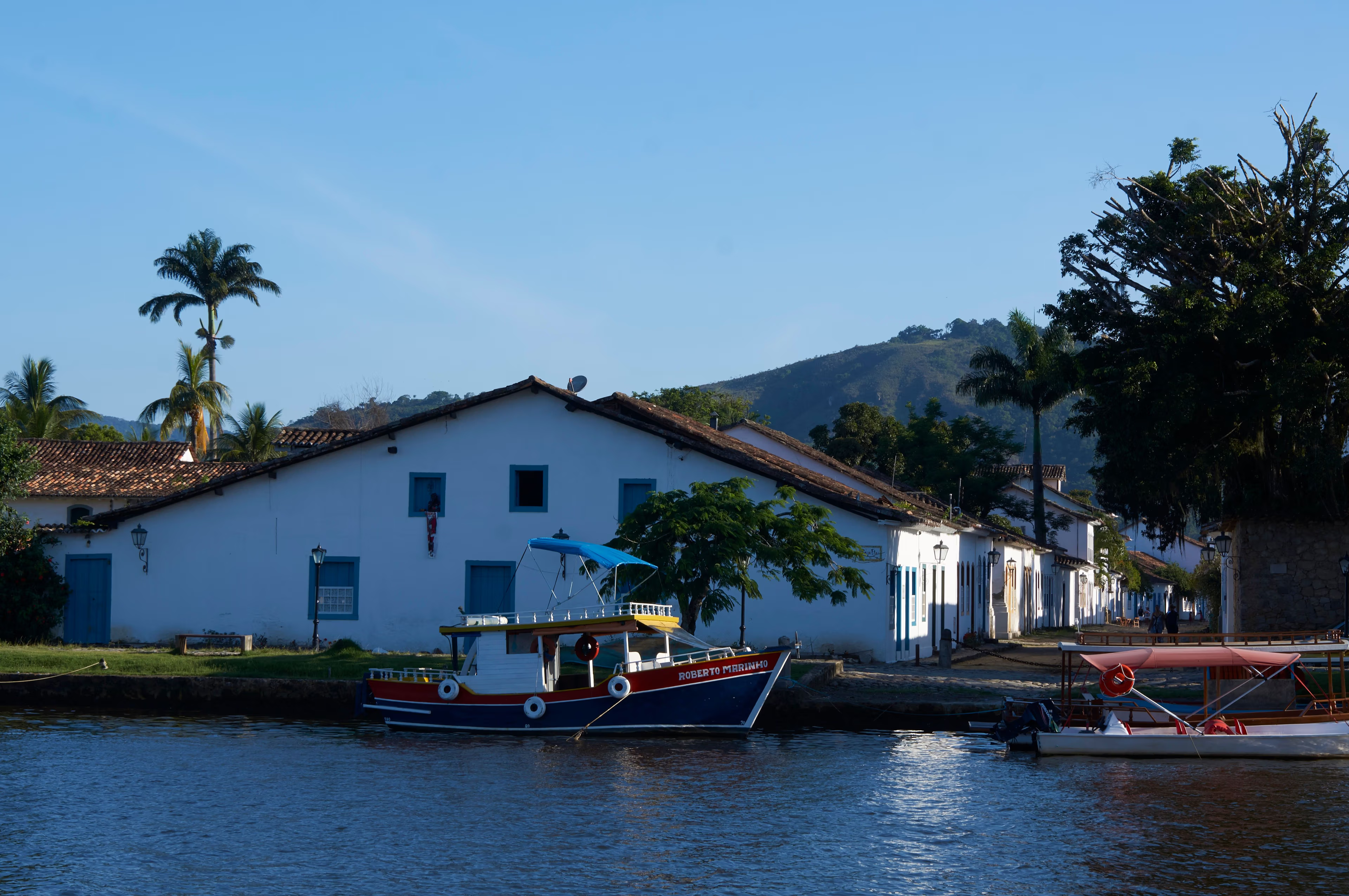
In Paraty, the historic center can supply a strong sense of return. Its streets, façades and public spaces give a town-based stay a recognizable setting. You may spend the day on the bay and still have an evening oriented around dinner, cultural activity or another look at familiar streets. The town remains an attraction when you are not taking an excursion.
On Ilha Grande, the return depends much more on where you stay. Abraão is a practical visitor base with services and departure options; other settlements and coves offer different levels of activity and connection. A room described broadly as being on Ilha Grande does not tell you enough about the experience of getting there or spending the evening.
Choose the base before choosing the photograph. A beautiful beach seen on a tour is not necessarily the beach outside your accommodation. A quiet island stay may also mean fewer casual alternatives when you change your mind. Those can be welcome qualities, but they should be chosen deliberately.
Paraty's streets give a day a second life
Paraty's historic architecture is particularly rewarding because it forms a townscape rather than a collection of isolated monuments. Repeated openings, white walls, colored doors and changing street perspectives give the center a visual coherence that survives small changes in route. You do not need to discover a new landmark every few minutes for a walk to remain interesting.
The waterfront places that architecture within a larger landscape. Boats, water and forested slopes keep the town connected with its surroundings. This relationship helps explain why Paraty can work for travelers who want cultural interest and coastal time within the same stay. Neither has to be reduced to a brief addition to the other.
The center's beauty should not be confused with physical ease everywhere. Irregular paving affects how comfortably you move, particularly with luggage, a stroller or limited mobility. A central address can still involve a surface or entrance that needs checking. Photographs of attractive streets rarely communicate those details well.
Repetition can be the point
A second walk through the same streets may reveal more than an ambitious outing farther away. Light changes the balance between wall and doorway. A cultural space that was closed may now be open. A route that felt unfamiliar on arrival becomes a simple connection between a meal and your room.
That familiarity is one of the pleasures of a town stay. You can develop a small daily geography without needing to exhaust the destination. A few known places make room for attention, because less of the day is spent working out what comes next.
A beautiful town with a complicated past
Paraty's preserved form cannot be separated from the histories that supported it. The town was connected with routes through which gold and other goods moved, and with an economy shaped by enslaved labor. Its architecture deserves admiration without allowing admiration to erase those foundations.
UNESCO's Paraty and Ilha Grande designation brings culture and biodiversity into one property. It includes the historic town and protected landscapes, while recognizing the presence and knowledge of Indigenous, Quilombola and Caiçara communities. The designation is useful context for a visitor precisely because it resists a simple division between a historic town and supposedly empty nature.
A cultural visit can help make that context more visible. Casa da Cultura de Paraty offers exhibitions and programs connected with the area's cultural life. Its work provides a way to encounter local histories and creative activity beyond the external appearance of the buildings.
Allow the institution's current program to guide the visit. A contemporary artist or an exhibition about cultural change may show a version of Paraty that the familiar street photograph does not. This can be particularly valuable after spending time admiring the center's visual continuity: continuity of appearance does not mean that life has stood still.
Leave room for present-day Paraty
A town is more than the period for which its architecture is celebrated. People study, make art, run businesses and debate how the place should develop. Visitors see only a portion of that life, but they can avoid describing the town as frozen in time.
The distinction matters because living places need more than picturesque preservation. Supporting a cultural institution, choosing local expertise and paying attention to contemporary work can make a visit more engaged without making it complicated.
Ilha Grande makes water part of the decision
On Ilha Grande, the sea is not only an excursion setting. It is part of arrival, departure and many connections between places. This gives the island an immediate sense of difference from a mainland town. It also means that the practical arrangements are part of the experience rather than something that can be ignored once a room is booked.
A boat journey can be a pleasure in its own right. The approach makes the forested coastline visible and establishes a physical separation from the mainland. But the same dependence on water has consequences when conditions change. Schedules, operating decisions and the exact landing point matter.
Abraão offers a relatively active setting for a visitor base. A quieter cove may appeal more strongly if the point of the stay is to remain in one place. Neither choice is automatically more authentic. The relevant question is whether the services, access and daily possibilities match what you actually want.
An island name is not an address
Before imagining a stay, locate the accommodation precisely. Ask how arrival works with your bags, what the final stretch involves and how you would reach the activities you care about. A remote setting can be wonderful when its limitations are part of the attraction.
This is especially important for mixed-interest groups. One person may want a long trail day while another wants an easy meal and time near the room. A base with suitable independent options can make those different preferences compatible. A more isolated choice may require the group to share more of its daily schedule.

Two ways of spending time on the water
Paraty and Ilha Grande both invite boat outings, but a list of similar-sounding stops can hide differences in the day. The important details are the type of vessel, group size, duration, boarding arrangements and how much time is spent moving compared with staying in one place.
In Paraty, a boat day can sit within a broader town-based visit. You return to the historic center and its evening possibilities. If a second day on the bay does not appeal, the town and mainland surroundings give other directions in which the stay can develop.
On Ilha Grande, a boat outing may connect places that are central to why you chose the island. It can complement a trail day or offer access to a different part of the coastline. The exact experience still depends on the operator and conditions; the same destination name can appear on trips with quite different pacing.
A useful comparison begins with what you enjoy about being on a boat. Is it the movement through the landscape, a social day with other passengers or time in the water? Choosing for that preference is more reliable than booking the route with the longest list of stops.
Fewer stops can mean a better day
A long itinerary can sound generous while allowing little time at each place. Ask how the day is divided and what happens if weather or sea conditions require a change. A shorter route with a thoughtful pace may be more satisfying than one organized around covering distance.
Also distinguish swimming conditions from scenic appeal. Clear-looking water in a photograph does not establish safety on the day you arrive. Follow the crew's and local authorities' guidance, and be comfortable remaining aboard or ashore when that is the appropriate choice.
Walking: a town surface or a forest path
Both destinations reward walking, but the demands differ. In Paraty's historic center, the challenge may be uneven paving rather than distance. On Ilha Grande, a route can involve slopes, roots, humidity and a meaningful commitment of time. Neither experience is well described by the word “stroll” alone.
The attraction of an island trail is partly the changing relationship between forest and coast. A destination beach can be the reward, but the route deserves attention in its own right. It also deserves preparation appropriate to its actual difficulty and current condition.
A well-known example is the connection from Pouso toward Lopes Mendes. Reaching the general area by boat does not remove the walking element of that approach. More broadly, a beach shown as a stop on a map may not be reached in the way a visitor initially assumes.
Choose a walk you want to walk
A trail is a poor bargain if it is treated only as an obstacle between you and a photograph. Find out about the terrain, route length, return arrangements and current access. Then decide whether the walking itself is something you want from the day.
The beaches and islands guide helps place these choices within Brazil's wider coastal possibilities. Some trips suit days centered on a single easy beach; others suit outings where access is part of the adventure. Recognizing the difference is more useful than treating effort as a measure of how worthwhile a place must be.
Food and evenings change the comparison
A stay does not end when the day's excursion returns. Evening preferences can be decisive when choosing between Paraty and Ilha Grande, especially if food is one of the main pleasures of travel.
Paraty gives a town-based evening a strong physical setting. The historic streets can connect a meal with time outside before or afterward, and cultural programming may add another focus. This suits travelers who enjoy making dinner part of the day's destination rather than simply finding something close to the room.
On Ilha Grande, the possibilities vary sharply by base. Abraão offers a different range of choices from an isolated accommodation where meals are closely tied to the property. The latter can be ideal for someone who wants to stop making decisions. It may be less satisfying for someone who enjoys choosing a new place each evening.
Neither destination should be judged by an abstract promise of freshness or authenticity. Ask what is actually offered, what needs arranging and whether dietary needs can be handled. A coastal setting does not guarantee that every menu suits every traveler.
Decide how much choice you want
Some holidays improve when choices become fewer. Others depend on the pleasure of comparing a few appealing possibilities. Be honest about which kind you enjoy.
If dinner is important, look at the base through that lens before booking. If you mainly want a comfortable place to return after an active day, other priorities may matter more. The best choice is the one that supports your habits, not the one whose description sounds most remote or exclusive.
Weather is part of the landscape
The Costa Verde's forested character comes with a climate in which rain belongs to the picture. A bright image of blue water and green slopes records one moment, not a promise for every day of a stay. The practical question is not how to eliminate uncertainty, but which destination still appeals when conditions alter the plan.
Paraty can be more forgiving for travelers who want indoor cultural options and a town to occupy part of a wet day. That does not make every rainy day easy. Streets, roads and excursions can still be affected, and a severe-weather warning calls for following local advice rather than seeking an alternative outing at any cost.
On Ilha Grande, weather can influence a larger share of the activities that drew you there. Trails and boat trips are more directly exposed, and an isolated base can feel very different during prolonged rain. A comfortable room and realistic expectations matter more than the promise of constant outdoor activity.
Consult the best time to visit Brazil guide for regional context, then check the actual forecast and local operating information close to your dates. Seasonal tendencies help with broad choices; they do not decide whether a specific boat or trail outing should go ahead.
Picture the changed-plan day
Imagine waking to weather that rules out the activity you expected. In Paraty, would you enjoy cultural time, a long lunch and a smaller walk when conditions allow? On the island, would you be content reading near your accommodation and letting the day remain quiet?
Neither answer is more adventurous or more sophisticated. They reveal what the stay needs to provide. A destination you enjoy only under perfect conditions asks more from the weather than any itinerary can guarantee.
Slowing down can mean very different things
“Slow travel” is often used as though it describes a single atmosphere. In practice, a slow day might contain a substantial museum visit, a walk with frequent pauses or several hours spent near the water. The common quality is not inactivity. It is the absence of constant pressure to move on.
Paraty can support slowness through a compact set of familiar town places. You do not need an excursion every morning. A cultural stop and a meal may be enough, leaving the rest of the day open to changes in light, weather or interest.
Ilha Grande can support it through a stronger commitment to a particular base and landscape. You might return to the same nearby beach, choose one longer outing and let other days remain simple. The island does not need to become a campaign to visit every named cove.
The easiest way to lose a slower pace is to keep adding departures. Packing, checking out, finding a transfer and orienting yourself again all use attention. Sometimes the extra night in the same place provides more value than the addition of another destination with a similar view.
The guide to how many days in Brazil approaches this through usable time rather than an impressive count of places. That distinction is particularly helpful here, where the appeal of several nearby destinations can disguise the effort involved in connecting them.

Traveling together without wanting the same day
The choice becomes more interesting when a couple, family or group has different interests. One traveler may want architecture and a substantial dinner; another may want trails and swimming. The destinations can accommodate different combinations, but the base and pace matter.
Paraty is often easier to organize around parallel interests because the town itself supplies things to do between excursions. A person who wants a quieter day may have a coherent plan without joining the whole group's outing. That advantage depends on a suitable accommodation location and the individual's comfort moving around.
Ilha Grande can work very well when the group shares an appetite for its outdoor rhythm. It can also work for different interests if the base has appropriate alternatives. A property reached only through a particular boat arrangement may make independent plans more complicated than a stay in Abraão.
Compare needs before activities
Start with the ordinary requirements: comfortable access to the room, meals, rest and a manageable return at the end of the day. Then compare the desired activities. This order prevents a spectacular excursion from overshadowing the parts of the stay everyone will experience repeatedly.
For children, older relatives or anyone with mobility needs, ask about the actual surfaces and boarding arrangements. Broad descriptions such as “central,” “beachfront” or “easy access” are not enough. A few precise questions can establish whether a place is suitable without making assumptions about what a person can or cannot enjoy.
The transfer belongs in the choice
Paraty and Ilha Grande are both commonly considered after Rio de Janeiro, but their connections should be evaluated as complete journeys. Accommodation departure, road transport, boat timing and the final arrival all matter. Looking only at one segment gives an artificially simple picture.
Paraty is a mainland town. Ilha Grande requires a crossing, with the appropriate departure point depending on the service and destination. If you combine the two, do not assume a regular direct public boat from Paraty to Abraão. A commonly planned connection involves a mainland road transfer followed by the island crossing.
This has an editorial consequence as well as a logistical one. Two destinations may share the same coastline yet still deserve a meaningful transfer day between them. Counting that day as a full beach day sets up a rushed arrival and an inflated sense of what the trip contains.
The getting around Brazil guide explains how to compare the whole connection and keep departure requirements visible. Use current operators for schedules and confirm the exact pickup and landing arrangements before committing to accommodation or activities that depend on them.
Protect the journey home
An island departure is not a good place to spend every last margin before an important flight. Weather, transport and road conditions do not always cooperate with an ambitious sequence.
Build the return around the consequences of delay, not merely the shortest advertised travel time. The calmer choice may be a mainland night before an onward departure. That night is part of making the trip work, even if it is less photogenic than one more evening on the island.
The same care applies to advance bookings within the stay. A protected-area visit, a particular operator or an accommodation reached by a specific crossing may need arrangements that differ from a casual town outing. The reservations and park access guide separates the kinds of decisions worth making early from those better left responsive to conditions. Use it to protect the experience that matters most, while keeping enough flexibility to enjoy the place around it.
When combining them makes sense
Paraty and Ilha Grande can complement each other very well. The town-and-bay rhythm followed by an island stay creates a clear change of setting. The combination is most persuasive when each place receives enough time to develop its own character beyond arrival and departure.
The Rio, Paraty and Ilha Grande itinerary shows one considered way to make that sequence work. Its value is in making transfers and nights explicit. It is not a requirement to reproduce the exact trip, and it should not be compressed mechanically if your available time is shorter.
If you have only a few nights to add after Rio, choosing one coastal base can be more satisfying. The destination you omit does not become a failure of planning. It remains a different possibility for a longer trip, while the place you choose receives enough attention to be more than a brief impression.
Think about the contrast you are seeking. If Rio has already supplied plenty of urban cultural time and you want the island condition itself, Ilha Grande may provide the more distinct change. If historic streets, a strong evening setting and varied days appeal, Paraty may fit more naturally.
A comparison based on the day you want
The most useful shortlist is made of preferences rather than superlatives:
- Choose Paraty when historic streets and town evenings are central to the appeal.
- Consider Ilha Grande when coast, trails and the experience of an island base are the main reason to go.
- Favor a serviced base when different travelers want independent daily options.
- Choose a quieter accommodation deliberately, after checking meals and access.
- Combine both when the trip has room for their different rhythms and the transfer between them.
- Keep a weather alternative in mind before booking the activity that matters most.
These are starting points, not rigid categories. Paraty has outdoor possibilities, and Ilha Grande has inhabited places with histories and cultural life. The distinction is about what organizes the stay, rather than everything each destination contains.
The coast is inhabited, not untouched
The phrase “untouched paradise” does little justice to this region. Forests and coastlines are protected landscapes, but they are also connected with people, knowledge and livelihoods. Traditional communities have relationships with the territory that are not incidental to a visitor's scenic experience.
Community-led tourism offers one way to learn more when it is genuinely organized and welcomed by the people involved. The Observatório de Territórios Sustentáveis e Saudáveis supports work with traditional communities in the wider region, including tourism connected with local priorities. The important principle for a visitor is to follow that invitation rather than treating a community as an attraction available on demand.
The same attention applies on an ordinary boat or beach day. Ask how operators approach protected areas, follow access rules and avoid assuming that a beautiful cove is unrestricted. Current visitor arrangements belong to the detailed destination guides and the responsible authorities; a compelling photograph does not override them.
Within the wider Rio and Costa Verde region, Paraty and Ilha Grande each offer an unusually rich relationship between place and pace. One lets the town remain present between journeys into the surrounding landscape. The other makes an island base and its connections fundamental to the stay. Choose the relationship that appeals to you, then give it enough time to become familiar.


